Mostrando entradas con la etiqueta Narratología. Mostrar todas las entradas

jueves, 15 de octubre de 2026

Retropost, 2006: Emergent Narrativity


Emergent Narrativity

Propuesta de introducción al libro sobre la narratividad que edito con John Pier para la serie Narratologia (Berlín y Nueva York: Walter de Gruyter; saldrá en 2007).  El borrador de la propuesta, en español, aquí.

Why is a narrative a narrative? What makes a narrative more or less narrative? Which properly narrative elements can be discerned in narrative architecture? Which are the formal and communicative resources a narrative can exploit or develop in specifically narrative ways? Which elements or resources can legitimately be labeled "narrative" in a text which is, nevertheless, not "a narrative"? These questions stake out, at least in part, the issue of narrative specificity, or narrativity.

These initial questions have some common ground, but they also point out different dimensions of the problem and directions for discussion.  We might therefore distinguish (following Gerald Prince) "narrativehood" (a matter of whether something is or is not "a narrative")  from "narrativeness" (the determination of how narrative it is, and in which ways) —as different dimensions of narrativity. Or we might differentiate diegetic narrativity from mimetic narrativity (with Ansgar Nünning and Roy Sommer). We may address the narrativity of the lyric, or the element of diegetic narrativity in drama; or analyze the narrative specificity of interactive online games. 

Two main approaches to the issue of narrativity might be labeled the "structuralist" and the "post-structuralist" one. Structuralist approaches tended to focus on formal approaches to narrativity and on the narrativity of "narratives"; post-structuralism has favoured the fuzziness of reader-response, and has explored the fringes of narrativity, or the narrative components of non-narrative phenomena.

A typical structuralist approach to narrativity might start from a structural analysis of the narrative text into levels of analysis (for instance, story and discourse, or fabula and siuzhet, or the three-level action, story and discourse). From thence, we might analyze the narrative specificity of each of those levels: e.g. which kind of actions will yield higher narrativity, or which discursive strategies are specific to narratives, or favoured by narrative representation. One might focus, for instance, on the varying modes and aspects of diegetic narrativity or those of mimetic narrativity; on the narrative logic of event sequences, or the different meanings and modes of closure at the level of the action, of the story structure, and of the rhetoric of narrating. Many of the constitutive phenomena of narrativity are still insufficiently explored within the tradition of mainstream or classical narratology, which therefore remains a fruitful line of inquiry.

Following a post-structuralist tack, on the other hand, one would stress the fact that "some narratives are born narratives, some become narratives, and some have narrativity thrown upon them". The (inter)active role of the receiver and the multiple contexts and uses of narrative would be emphasized. One remembers that in the heyday of formalism, literary theorists tried to provide formal or structural definitions of literature. These have been by and large discredited and now functional definitions are preferred: few theorists would now question that "some literary works are born as literature, some become literature and some have literariness thrown upon them". Certainly, making a similar claim about narrative is a much bolder and (arguably) questionable move. After all, isn't narrative by definition a structure (e.g. "a structure of events")?

However questionable when pushed to an extreme, this relativization of narrativity is a fruitful line of inquiry for poststructuralist narratology. Far from being dependent on universal, context-free structures and traits, narrativity is largely tied to pragmatic, functional, contextual, generic and cultural circumstances.  Classical narratology provided "grammatical" or structural definitions of narrativity; but this phase of narratology has been succeeded by poststructuralist or postclassical narratology. A useful contrastive characterization of both phases can be found in Gerald Prince's article "Narratologie classique et narratologie postclassique" in Vox Poetica. Postclassical narratology favours definitions which are more interdisciplinary and more tied to cultural contexts and debates. Definitions—or perhaps problematizations, as when, for instance, the very concept of narrativity is problematized, by being considered no longer a neutral concept but one defined in relation to issues of genre, of standard and nonstandard language, and generally speaking as an issue of social semiotics (as in Beatriz Penas's chapter in this volume). 

According to the glossary of the recent Blackwell Companion to Narrative Theory (ed. James Phelan and Peter J. Rabinowitz; Blackwell, 2005), narrativity is "the formal and contextual qualities distinguishing narrative from non-narrative, or marking the degree of 'narrativeness' in a discourse, the rhetorical principles underpinning the production or interpretation of narrative; the specific kinds of artifice inherent in the process of narrative representation." (P. 548) There is ample room in this definition to consider that the narrativity of a text (or "phenomenon") need not to be predetermined, but may rather be subject to reinterpretation, or be jointly constructed through the interaction of the narrator and the receiver or interpreter.

The issue of narrativization must therefore be considered together with narrativity. Narrativization involves a structuring, narrativizing activity exerted on non-narrative or material, or the reorganization of previous narrative structures in order to produce a new narrative (cf. José Ángel García Landa's paper on retelling in this volume). In Hayden White's narratology of history, narravitization is a task effected by the historian to impose a plot-like order on prenarrative historical data; here it is the author who narrativizes. Monika Fludernik has emphasized, instead, the reader's use of narrativizing strategies to naturalize difficult texts—e.g. by reading them as as a sequence of events, or as the focalization of an experiencing mind. 

Gerald Prince, who has distinguished the dimensions of "narrativehood" and "narrativeness" within narrativity, has thereby drawn attention to the narrativity of texts that we wouln't want to call narratives; these texts may show different kinds of narrativeness (e.g. the representation of experientiality, varying proportions between action and commentary, between virtuality and actuality of the represented events… etc.) without thereby qualifying for narrativehood. These degrees of narrativeness are perhaps best classified by Didier Coste's mapping of different traits which may be present in a greater or lesser degree (in Narrative as Communication). The main constitutive elements of narrativity according to Coste are: transactiveness/non-transactiveness, transitiveness/intransitiveness, causality/non-causality, specificity/generality, singularity/banality, and the presence/absence of alternative courses of action.

Apart from these scalar categories, Marie-Laure Ryan has noted the importance of the dimension of virtuality/actuality in plots (and the varieties of its unfolding in the contrast betweeen the "actual" narrative world and the private worlds of the characters;  she has also emphasized the relevance of different modalities of narrativity: the simple narrativity of folk tales, the figurative narrativity of genres such as the lyric, philosophy, or history; the complex narrativity of canonical novels; the instrumental or subordinate narrativity of exempla, sermons… etc.

The recent Routledge Encyclopedia of Narrative Theory features articles on narrativity by Prince, and on narrativization by Jan Alber, which address these issues. But arguably other articles on narrative in this volume are just as relevant to a discussion of narrativity: those addressing issues of genres or text-types. Reflecting on narrativity along the lines of text-type takes us back inescapably to the definition of narrative, and (in Alexandra Georgakopoulou's article in the Routledge Encylopedia of Narrative Theory) back to definitions such as Chatman's: narrative necessitates a double chronology, the chronology of representing discourse and the chronology of represented events in the story (—on which more shortly).

Text-type approaches to narrativity may address the specific differences in the narrativity of properly narrative genres (e.g. kinds of plot-structures in drama vs. those of novels; the Aristotelian contrast between the tragedy and the epic; the narrative specificity of the short story, etc.). That is, different kinds and modes of narrativeness. Issues of narrativehood have also been prominent: the frontiers of narrative vs. those of other major text types, such as exposition, explication, instruction, or non-narrative conversation. Linguistic theories of discourse modes or speech-act theory are also highly relevant to this discussion. 

As noted by Georgakopoulou, some theorists (Bruner, Swales, Virtanen; one might add Ricoeur, Dennett, Turner, Fisher, etc.) have placed narrative at an even higher structural level, beyond these text types. Narrative would be a more encompassing cognitive operation or macro-text-type; such approaches tend to emphasize the presence of narrativity (the narrative ingredient) in each of these major text-types. Georgakopoulou finds that by focusing on narrative at such a level of generality, one tends to forget to keep a perspective on the specific differences between actual narratives. Contemporary tendencies in analysis tend to focus less on abstract formal elements, and emphasize instead the intricacies of specific and situated uses of forms in localized generic or social contexts. "One possibility would be to explore narrative as a dynamic conglomeration of more or less prototypical textual, functional, and contextual parameters" (596). She emphasizes the varying uses of resources in different contexts and the and changing degrees of attention users pay to these resources, as well as the appearance of local hybrid modes in specific communicative contexts and communities.

Clearly, what is "a good story" in one community or under one set of conventions may be sorely lacking in narrativity from a different point of view. The eye of the beholder, therefore, must be taken into account in any discussion of narrativity. One might also look to deliberate parodies or anti-narratives, which deconstruct narrative conventions and show a kind of negative narrativity, a narrativity by contrast.

A longer article on "Genre theory in narrative studies" by Michael Kearns in the Routledge Encyclopedia of Narrative Theory necessarily covers some of this ground as well. We find here again a conception of genre (narrative genre, in this case) as a set of conventions "activated" by the reader: "To approach a text as *narrative is to implement expectations about point, *narrative progression or transformation, *actants, and *narrator (see narrativity; tellability); in fact, any text containing a sequence of *events invites these expectations" (201).

Kearns traces back to Aristotle the classical or taxonomic conceptions of genre, and notes that in the twentieth century these were displaced by functionalist concepts which integrate literary genres within a wider linguistic framework. Thus, Genette redefines narrative as a "linguistic mode" beyond the limits of specific literary genres—a mode which can be used by any genre. And Derrida's "law of genre" conceives of texts as partaking of genres without belonging to them. This law is also relative to the act of reading: thus, the narratologist must examine the ways in which readers use narrative conventions together with those relative to other types of discourse in dealing with a given text. 

The influence of hermeneutics, Kearns notes, has also put restraints on foundational and absolutist conceptions of genre, since the hermeneutic circle necessitates a two-way movement between text and reader and a negotiation between the various elements and component parts of a discourse. None of these strictures on "genre", however, limit the need to study narrative as a specific cognitive, linguistic and cultural phenomenon, with a distinctive status and requiring special study. But present-day theorists prefer to approach genres and discourse modalities with a multidimensional grid of scaled parameters, rather than with absolute and exclusive categories—a fuzzier approach to the issue of specificity both at the level of genre and at the level of the individual text.

Issues of genre bear on the production, the receiver's processing and the cultural reception of specific narratives. On the pole of production, generic narrative patterns act as guidelines, from the most general level of narrative configuration understood as a basic cognitive process, through overarching cultural master narratives, archetypal patterns, or myths—indeed all the dimensions of Genette's architextuality—up to the concrete ideologies located in a specific period or commmunity. The processing, reading or interpretation of narratives likewise necessitates such architextual and ideological patterns to allow communicative interaction. Cultural institutions and ideological processes then reuse specific acts of reception (and in turn condition them) so that certain narrative patterns, genres, or certain specific narratives, are awarded a privileged cultural status (e.g. "literature", "history") or are otherwise associated to specific communities, communicative contexts, functions. The social uses of narrative patterns at the levels of production, of processing and of cultural reception feed back on each other, so that, for instance, producers of narrative do not work in a void but in a cultural context which receives certain kinds of narrative in ways which are to some extent pre-established (while potentially subject to change through individual action).

As we have noted, many recent theorists have emphasized the role of narrative as a natural linguistic mode and an ingredient present in many genres.  This "wider" conception of narrative as an overarching mode dissociated form specifically narrative texts has recently come under attack by Shlomith Rimmon Kennan ("Concepts of Narrative", in The Traveling Concept of Narrative). Rimmon-Kenan takes issue with the generalized use of the term "narrative" in psychoanalysis, in critical discourse analysis, and in other humanistic disciplines. Although she recognizes the presence of narrative elements in many of the phenomena these disciplines label as "narratives", Rimmon-Kenan insists on the need of a double time sequence (that of action and that of its representation) and of a mediating instance (a narrator, etc.) in order to label a phenomenon as "narrative".

(Although one wonders, alongside with proponents of three-tiered narrative models, whether the triple chronology of (1) action, (2) story and (3) narrative discourse may not be more adequate:
- The chronology of action, i.e. the narrated events not as they are narrated but as they are supposed to have happened.
- The chronology of story, i.e. the narrated events in the order, perspective, etc. articulated by the narration.
- The chronology of narrative discourse, i.e. the story plus the narrating of the story, or the narrating as speech event, including digressions, interactive moves towards the receiver, etc.)

While many (literary) narratologists may have found irritating the anything goes use of "narrative" by social analysts or psychologists, and to that extent agree with Rimmon-Kenan's strictures, one might also object the following. When a (social, psychological, political, etc.) analyst calls something a "narrative" and then goes on to analyze it, s/he is not necessarily presupposing that the narrative has already been articulated by someone. Quite often, the analyst is doing double duty: at once constructing the narrative, articulating it out of disperse and partially related elements in the discursive space being analyzed, and immediately (or simultaneously) s/he articulates in addition a counternarrative which provides an alternative account or helps configure a more comprehensive argument (thereby showing that the narrative which has been identified or brought to light in the discursive space under consideration was one-sided or ideologically biassed).

It is understandable that, in the process, sometimes straw targets may be set in order to be demolished, or open doors may be closed so that the analyst may crash through them (no doubt depending on one's viewpoint vis à vis the door). Yet there is possibly no other way in which the analyst's work may be done. For instance, if we speak about "the Left's narrative of the Spanish War" we create to a large extent a fiction, which will have to be much more closely argued and articulated in detail if we want to avoid simplistic a simplistic perspective. Be as it may, we will be effecting a selection, structuring, interpretation, etc., both of the discourse on the Spanish War (extracting a narrative from them) and of the narrative subject to whom we attribute that narrative ("the Spanish Left", for instance). And that work of narrative structuring will be done, quite possibly, with a view to effecting a critique of the narrative we have just articulated.

Therefore, from an interactional, postclassical, or socio-semiotic perspective on narrativity, the analyst is not a neutral analyst. It is not just that the process of analysis is ideologically articulated: the very object of such analysis is constituted in part by the analysts themselves. It is the analist who must bring to light the narrativity of the object under study, in order to deconstruct that narrativity.

To be sure, good analysts do not produce that narrativity out of a top hat; instead they offer a clear, well-structured, convincingly argued formulation of phenomena which are socially active, making us see clearly for the first time (ne'er so well expressed) the relationships between phenomena whose mutual relation, we now sense, was on the tip of our tongue or of our minds. To go on with our example, the analyst will offer a perspective on "the Left's narrative of the Civil War" which is better argued than that of "the Left" itself (which is, to be sure, a fuzzy Narrator). Then the analyst will subject to a critical analysis or deconstruction this narrative which has been articulated in good measure thanks to his/her own analytic work.

The essential issue here is that both the narrative which is extracted and the critique to which it is subjected are narrativizing performances which must have a hermeneutic value, and help interpret the phenomenon under analysis, first in its existing social manifestations, then in the critique thereof. Both steps must manifest the emergent and interpretive value of narrative, constituting objects of knowledge where nothing but unconnected phenomena existed before. The social analyst, therefore, does not face the situation Rimmon-Kenan's critique would lead us to surmise, with well-articulated narratives, with a narrator, and a double temporal sequence, ready for analysis. Before they deconstruct a "narrative", social analysts must construct it. Such an activity may involve much self-serving and navel-gazing argumentation. Nonetheless, it cannot be done otherwise. Ideological debate is made of narratives and counternarratives.

There remains to mention yet another crucial issue in the analysis of "perceived" and emergent narrativity, one which opens a metatheoretical dimension in narrative analysis. Different theories of narrative (and different theories of narrativity), and the practice of different narrative analyses, may be considered to be different perceptual instruments which capture narrative "wavelengths" which escape other theories (or, as Kenneth Burke would put it, other "terministic screens"). Therefore, theoretical investigation and practical analysis of narrative alike help to develop, in an emergent way, new dimensions of narrativity—an interaction between narrative text and narratological metatext which in turn feeds back on the development of new modes of narrative which exhibit new dimensions of narrativity. 

Several chapters in this book thus bring into clearer focus the narrativity in phenomena which are not obviously narrative—an instance may be Meir Sternberg's chapter on the narrativity of legal statutes, or Marie-Laure Ryan's analysis of the peculiar narrativity of online videogames.

To take another instance,  recent cognitivist analyses have emphasized the psychological narrativity of action sequences, plans, etc., in subjective experience. One might argue that, according to classical definitions, there is no narrativity here, since there is no communication from one subject to another, there is no identifiable text, there is no representation… although maybe we should draw the line here and concede that there is, of course, a process of representation involved here. And we might as well concede that there is, too, a process of self-communication. As a matter of fact, consciousness, in an emergentist conception such as George Herbert Mead's, is a process of self-communication. The notion of "self-indication" addressed by an organism to itself is crucial here.

A narratology which is able to include this narrativity of consciousness among the phenomena analyzed is an instance of the kind of theory that contributes to the perception of narrativity where none was to be seen—which almost (though not quite) amounts to saying, where there was none before theory came along, to bring emergent narrativity to the surface.


miércoles, 14 de octubre de 2026

Narrative levels and the structure of enunciation

A colleague from the University of Belgrade is interested in some narratological themes I have addressed before, more specifically the issue of embedded narratives. The basic question he asks me about is:

whether the transition between narrative levels can be defined in terms of the structure of enunciation.

Suppose a narrator tells a story in which Mary says that Peter told her that the king was dead. Does the presence of an embedded act of enunciation suffice to establish a distinct narrative level, or must that act organize a further narrative domain?

I am particularly interested in the minimum structural conditions that distinguish an embedded speech act from a genuinely embedded narrative. Could the distinction be formulated in terms of the relations between narrating instances and represented content, without appealing to the number or complexity of sentences?

  So the  core question is : what are minimal conditions for establishing a new narrative level? 


My answer goes as follows:

Dear Pavle,
Mieke Bal addressed this issue in her book Narratologie: Essais sur la signification narrative dans quatre romans modernes (Paris: Klincksieck, 1977), which is not at all the same as her Narratology, and much rarer to find. If you can get it on loan however I would advise its reading. For her, every instance of direct speech is an embedded discourse, so there is not an absolute borderline between embedded narratives and any other kind of embedded discourses. Well, the more it becomes a distinct narrative, with different characters and a different plot-line, the more reason you have to speak of a different, and embedded, narrative. All the more if this narrative is explicitly presented as a fiction, story, etc., written or invented by one of the characters. There may be a change of level in terms of enunciation, and also a different (embedded) fictional world, which is another matter. But there may be many intermediate forms — a lengthy narrative by a character about the past of this intradiegetic narrator, or about other characters... so you see there are a number of dimensions or paramters which may lead you to consider a given discourse as a distinct and embedded narrative. But any sentence, or any representation, by a character, however minimal, may exhibit some degree of narrativity, so the way I see it is as a gradient with many different degrees; some people may speak of autonomous embedded narratives in some instances, other cases may be more debatable. Again, some embedded representations may be quite distinct as framed or embedded forms, but lacking in narrativity, so that is another dimension to take into account. I wrote a paper on this issue, alas it is in Spanish, but I'm told AI translation works wonders nowadays, I'll have to try it myself some day! It should be included in this bibliography on narrative embedding, or maybe you'll find some other reference which turns out to be useful:
Anyway, if you want to discuss any of the issues mentioned, drop me a line by all means.
Best regards,
 
— the paper in question is, perhaps, this one:

_____. "Nivel narrativo, status, persona, y tipología de las narraciones." Academia 9 Feb. 2011.*

         https://www.academia.edu/435296/

         2015 (+AI podcast, 2026)

And it has an introductory podcast in English too. 

lunes, 12 de octubre de 2026

Narratología Evolucionista - en GETTR

Narratología Evolucionista - nueva dirección en GETTR, aquí:

 https://gettr.com/user/joseangelglanda 


Continúa aquí NARRATOLOGÍA EVOLUCIONISTA - que empezó en Facebook en esta dirección:

https://www.facebook.com/narratologiaevolucionista/

Ante la nueva política de Meta que impide poner más de dos enlaces por mes (WTF????) trasladamos el blog a un sitio más hóspito, mientras dure. Mientras dure el uno, y mientras dure el otro, que aquí nada dura y todo evoluciona. 

 https://gettr.com/post/p44ljx071c5


En Gettr lo digo, y en Facebook: 

 https://gettr.com/post/p44ljx071c5


La construcción narrativa de la ética

 Una tesis de teoría literaria, sobre ética y narratología de la literatura infantil y juvenil, en la que se me cita.

Salaberría Areito, Garbiñe. "La construcción narrativa de la ética: Contextos sociales y valores en la literatura infantil y juvenil." Ph.D. diss. Universidad del País Vasco, dir. Benjamín Tejerina Montaña. Leioa, 2011. Online at Academia.*

         https://www.academia.edu/89553549/L

         2026


Lo que se cita (en la bibliografía nada más) es mi libro Acción, Relato, Discurso. 


miércoles, 7 de octubre de 2026

NARRATOLOGÍA (y Bibliografía)


Narratology
 

Me cita la Wikipedia (inglesa) en el artículo sobre NARRATOLOGÍA; en concreto enlaza la Bibliografía de Teoría Literaria, Crítica y Filología (sección de Narratología) en la sección de enlaces externos.

_____. "Narratology." Wikipedia: The Free Encyclopedia.*

         https://en.wikipedia.org/wiki/Narratology

         2026

Le he actualizado el enlace, que remitía a una dirección obsoleta y poco útil en el Archivo de Internet. Ahora está aqui: https://personal.unizar.es/garciala/bibliography.html

Ya hemos hecho algo. Ahora el artículo empieza con Propp y acaba conmigo. 

En cuanto al artículo correspondiente de la Wikipedia en español, no cita mi bibliografía, pero empieza, además de con Propp, citando mi definición de narratología en el libro Acción, Relato, Discurso:


Wikipedia, Narratología


_____. "Narratología." Wikipedia: La enciclopedia libre.*

         https://es.wikipedia.org/wiki/Narratolog%C3%ADa

         2026


Todo esto es en última instancia irrelevante, etc., pero sin embargo también me alegro porque supone un pequeño reconocimiento de mi trabajo en esta disciplina de la narratología, en la que trabajé con cierta asiduidad entre 1985 y 2020... después de haberme interesado por el tema desde finales de los setenta... precisamente al conocer los trabajos de Propp sobre la estructura narrativa.

El artículo sobre narratología de la Wikipedia francesa también se ilustra con un retrato de Propp. El mío no está. Pero sí cita un libro que coedité con John Pier, Theorizing Narrativity. Aquí lo pueden mirar, si aún no lo han borrado.

_____. "Narratologie." Wikipédia: L'Encyclopédie libre.*

         https://fr.wikipedia.org/wiki/Narratologie

         2026


martes, 6 de octubre de 2026

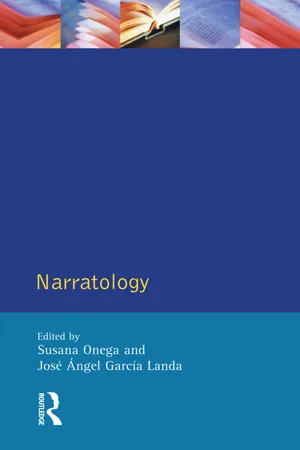
Narratology: An Introduction

Aquí una versión en pdf de nuestro libro de narratología, el que el siglo pasado era de Longman y ahora es de Routledge. En la biblioteca digital PERLEGO: https://www.perlego.com/book/1555786/narratology-an-introduction-pdf

Narratology
  1. Available on iOS & Android
eBook - ePub
Free preview

Narratology

An Introduction

About this book

This text provides an excellent introduction and overview of Narratology, a rapidly growing field in the humanities. Literary narratologists have provided many key concepts and analytical tools which are widely used in the interdisciplinary analysis of such narrative features as plot, point of view, speech presentation, ideological perspective and interpretation. The introduction explains the central concepts of narratology, their historical development, and draws together contemporary trends from many different disciplines into common focus. It offers a compendium of the development of narratology from classical poetics to the present. The essays are all prefaced by individual forewords helping the reader to place each individual selection in context. Recent developments are assessed across disciplines, highlighting the mutual influences of narratology and deconstruction, psychoanalysis, feminism, film and media studies.
  • 336 pages
  • English
  • ePUB (mobile friendly)
  • Narrativity of the Photoblog

    An audio introduction to...

    _____. "Narrativity of the Photoblog." AI podcast on José Angel García Landa's paper. Academia 8 Oct. 2026.*

             https://www.academia.edu/7989097/


    This paper examines the storytelling dimension of personal photoblogs from the point of view of narrative semiotics, taking into account both deliberate and spontaneous narrativity, and the narrative sequences constructed by the medium as well as those constructed by the viewers.


    miércoles, 30 de septiembre de 2026

    Hasta aquí llegó NARRATOLOGÍA EVOLUCIONISTA

     Voy a dejar de publicar mi blog sobre NARRATOLOGÍA EVOLUCIONISTA en Facebook. Estaba aquí:

     https://www.facebook.com/narratologiaevolucionista/

    —pero pongo este mensaje de despedida:

    VEO QUE ESTOS MIERDAS DE FACEBOOK-META EMPIEZAN A JODER LA MARRANA PONIENDO LIMITACIONES DE ENLACES. PUES SE VAN A QUEDAR CON LO PUESTO, Y YO ME VOY A OTRO SITIO. ¡¡¡ASÍ SE HUNDE UN SITIO QUE YA NACIÓ ANTIPÁTICO Y SIGUIÓ POR PEORES CAMINOS!! 

    —ante sus intentos de pastorearte y de colocarte sus herramientas e inventicos, y cambiarte las condiciones con las que empezaste a trabajarte el sitio. 

    Hasta hoy, podías poner enlaces libremente. De repente, para poner enlaces libremente en tus publicaciones, te piden que pagues 500 dólares al mes.  500 dólares. Paso de cero a quinientos al mes. ¿Quién es el idiota que ha diseñado esta política de transición? Como siempre, son los necios los que hunden a las empresas con sus actuaciones estúpidas—empezando por el Necio Mayor, el CEO, casi digo el feo.

    En los comentarios sobre la política, "¿Te ha gustado la explicación?" —les digo que no me gusta LA NUEVA POLÍTICA, y este comentario les pongo:

            Cambiarnos las normas de uso a mitad de camino es una ESTAFA. Nos iremos a otro sitio, y se quedarán ustedes con sus nuevas normas. ASÍ SE HUNDE UNA RED SOCIAL.

     Eso después de sus absurdas censuras pudibundas y puritanas, sanitarias, covidistas, etc. Un horror comparable a sus espantosas y antipáticas interfaces de usuario.

    No hay más que ver a Zuckerberg para saber que te va a estafar antes o después.  Pues ahí se queda, y yo me voy a otro espacio. A éste por ejemplo, mientras dure, que todo pasa y nada queda.


     Por cierto que había y hay otra página sobre narratología evolucionista, Evolutionary Narratology, ésta más estricta en inglés y en tema, y a la que bien poco voy a contribuir en el futuro, igualmente.

    Herramientas así no son serias.


    _____


    Como digo, para más narratología evolucionista, ir a esta etiqueta de mi blog, "Narratología evolucionista"

    https://blogdenotasvanityfea.blogspot.com/search/label/Narratolog%C3%ADa%20evolucionista

     —o a otras etiquetas relacionadas como "Evolución", "Evolucionismo", "Emergencia", "Complejidad", "Cosmología...", "Narratología"....

    —También se puede ir a este foro de Knowledge Commons:

    https://hcommons.org/groups/narrative-theory-and-narratology/forum/topic/evolutionary-narratology/

    Y está por último el blog de Knowledge Commons, sobre Narrative Theory and Narratology:

    https://narrativetheoryandnarratology.hcommons.org/ 


    Y en fin, lo que no me ha dejado colgar es este audio sobre evolución emergente:


    Rafael Gómez, José. "2154 - ¿Por qué existimos? El secreto detrás de la vida, la mente y la tecnología." Audio. Ivoox (Universo de Misterios) 22 Sept. 2026.* (Universe, Cosmology, Complexity, Emergence, Life, Biology, Mind, Intelligence, Artificial intelligence, Statistics, Probability).

    https://go.ivoox.com/rf/181017027

             2026


    Abusos de Facebook

    martes, 29 de septiembre de 2026

    Retropost, 2006: Narración, interacción e interpretación


    Narración, interacción e interpretación

    Me han publicado en el Rincón de Opinión de la Universidad de Zaragoza (—Opiniones vedadas al vulgo, y sólo visibles para autorizados ojos universitarios) el artículo de ayer sobre la Investigación en grupo (o tribu). Buscando ayer por el despacho el papel ése donde me decía la DGA que no investigaba con suficientes aragoneses, me apareció también mi colección de otros informes negativos. Que tengo unos cuantos, pues nunca se me ha concedido un proyecto de investigación si no era en un equipo dirigido por un catedrático. (Puede que sea casualidad, pero es mi experiencia con estos proyectos: tened y se os dará, como decía Cristo).

    Bien, pues qué lástima no haber tenido el blog hace tres años para publicar el informe negativo de mi último proyecto rechazado. En fin, aunque con retraso, como ahora lo encuentro, ahí va. Lo presenté a la convocatoria del Ministerio dos años consecutivos, uno con equipo y otro sin, pero ni con con ni con sin. Ante eso, cabrían, supongo, dos opciones:
    - una, seguir presentando el mismo proyecto, con las pequeñas modificaciones a que pudiera haber lugar, ad infinitum, o hasta el caso (improbable) de que me lo concedieran. Qué pesado este señor, ¿no? siempre con lo mismo, hala, dile otra vez que no, que ya lleva cinco informes negativos.
    - otra, abandonar esa línea de investigación y dedicarme a algo que (según el olfato del momento) el Ministerio pueda querer financiar.
    Pues ni una ni otra. Lo que hago es, mientras no perciba cambios sustanciales en el panorama, pasar de rellenar impresos... y dedicarme a investigar con los medios de a bordo y sin reconocimiento oficial. Que tiene gracia, porque menos que la ridícula cantidad que les pedía como ayuda para libros y un par de viajes, me interesaba por supuesto el simple hecho del reconocimiento del proyecto como tal, por el acoso administrativo que representa en mi departamento ser un hombre de-proyectado (como diría nuestro antiguo colega Benno Hübner). A la DGA de hecho no le pedí otra cosa que el reconocimiento de la existencia, sin aflojar un duro, y ni eso dio. 

    Pues oigan, ¿saben? Que paso. Que con estos planteamientos, que rellene más impresos de solicitud de proyectos su tía. Yo tengo otras cosas más interesantes en las que perder el escaso tiempo de vida que me queda. Y si la Universidad estima oportuno contratarme como funcionario para docencia e investigación, pero luego hay que rogarle por favor que implante docencia para que yo pueda darla, y que se digne reconocer la existencia de la investigación que produzco... pues ella sabrá, quien paga manda. Es que ésa es otra, ahora de repente nos ha cambiado el panorama súbitamente, y resulta que somos nosotros los que tenemos que justificar en términos de rentabilidad el trabajo en nuestras disciplinas académicas, y rogar que no se supriman las titulaciones que tenemos contratos vitalicios para impartir... y que nos den cuatro duros para realizar la labor que nos han contratado para realizar. O al menos que aunque no den ni un duro, se molesten en reconocer que en efecto la estamos realizando. Pues ni por esas, no nos vayamos a crecer y a presumir de que somos gente con proyectos, oye.

    Bueno, a lo que iba. Ésta es la copia cuasi-facsímil del informe negativo que me dieron cuando pedí al Ministerio una ayuda (o reconocimiento) para el proyecto "Narración, Interacción e Interpretación", solo y a las bravas, cosa en modo alguno descartada por las bases de la convocatoria:

    PROGRAMA NACIONAL DE PROMOCION GENERAL DEL CONOCIMIENTO
    AREA DE CIENCIAS SOCIALES


    REFERENCIA: BFF2002-00268
    INVESTIGADOR PRINCIPAL: JOSE ANGEL GARCIA LANDA

    ORGANISMO: UNIVERSIDAD DE ZARAGOZA

    TITULO: NARRACIÓN, INTERACCIÓN E INTERPRETACIÓN

    OBSERVACIONES:

    EN REALIDAD EL EQUIPO NO EXISTE, PUES ESTÁ COMPUESTO POR UN ÚNICO INVESTIGADOR, QUE TIENE SIN DUDA UNA IMPORTANTE EXPERIENCIA INVESTIGADORA, EXTENSA Y DE ALTA CALIDAD A NIVEL INTERNACIONAL (COMO PONE DE MANIFIESTO SU EXCELENTE CURRÍCULO), EN ESPECIAL EN EL CAMPO DE LA NARRATOLOGÍA, QUE ES EL OBJETO DEL PROYECTO QUE PRESENTA. EL OBJETIVO PRINCIPAL DEL PROYECTO ES DE TIPO METODOLÓGICO, CONSISTENTE EN FUSIONAR DIVERSOS MODELOS DE ACERCAMIENTO AL HECHO NARRATIVO, TANTO DE TIPO ESTRUCTURAL PROPIO DE LA NARRATOLOGÍA LITERARIA MÁS CLÁSICA COMO DE ENFOQUE LINGÜÍSTICO. COMO TAL OBJETIVO ES SIN DUDA MUY INTERESANTE Y MUY AMBICIOSO PUES PRETENDE INTEGRAR DISCIPLINAS DIVERSAS DE LA CIENCIA DE LA LITERATURA Y DE LA LINGÜÍSTICA. SIN EMBARGO SE TRATA DE DISCIPLINAS VASTAS Y COMPLEJAS, SOBRE LAS QUE ES DIFÍCIL QUE UN SOLO INVESTIGADOR PUEDA MANTENERSE AL DÍA. EN RESUMEN, SI BIEN CABE DUDAR DE LA SINGULAR CAPACIDAD DE TRABAJO Y DE LA CALIDAD DEL MISMO QUE HA DEMOSTRADO EL SOLICITANTE, DEBIDO A LAS CARACTERISTICAS Y OBJETIVOS PROPIOS DE LA PROPUESTA (VÉASE APARTADO B) ES DIFÍCIL CREER EN LA VIABILIDAD DE ESTE PROYECTO.

    Bueno, pues sin proyecto que me quedé, yo y la Ciencia, porque claro, aunque he seguido trabajando en esa línea, al no tener compromisos que cumplir también me he dedicado a otras cosas, por ejemplo a los blogs. Y he seguido colaborando con mis colegas de París y Hamburgo etc., pero sin poder aportar un duro a la colaboración. Es curioso eso de "en realidad el equipo no existe" después de invitar en la convocatoria a equipos o investigadores individuales. Claro que como el impreso (cortado por el patrón de las ciencias experimentales) decía "equipos", pues equipo que te casco, y si el equipo es de uno, pues ya veremos si se lo pasamos o no. También contiene el informe un lapsus gracioso , ése de "si bien cabe dudar de la singular capacidad de trabajo" etc., por "no cabe dudar". Ya se le iba la mano a quien lo hizo hacia la negativa que iba a dar. En suma, que soy muy bueno, y el proyecto es muy interesante, pero que no lo sabré hacer porque al informante le parecen muy difíciles estas cosas y demasiado estudiar, —y que no me financien. Que nadie sabe a la vez de lingüística, literatura y filosofía (¡pero si el proyecto era para desarrollar eso precisamente!). Claro que al año siguiente, en colaboración con más gente de lingüística, literatura y filosofía, tampoco lo dieron, con razonamientos parecidos. Por entonces (y supongo que por ahora) la política de la comisión de proyectos era dar mucho dinero a muy poca gente (incluidos miembros de la propia comisión), en lugar de tender a repartirlo entre los investigadores solicitantes. Y, en fin, por mí que les den bola, a mí ya me la han dado.

    Para sacar del baúl de los recuerdos los fines y planteamientos del proyecto, esto era un trozo del principio:

    Narración, interacción e interpretación

    Este proyecto pretende desarrollar el marco conceptual de la teoría narrativa, buscando un paradigma teórico más integrador, que ayude a potenciar la capacidad analítica de las teorías narrativas actuales y su capacidad interpretativa en el análisis de textos culturales concretos.

    Esto se logrará, básicamente, mediante un estudio interdisciplinar que integre los logros analíticos de diversas disciplinas y metodologías. En esencia el proyecto hará confluir tres líneas de trabajo sobre la narración, una de ellas específicamente limitada a este estudio (la narratología de tradición estructural) y otras dos que han contribuido ocasionalmente a la reflexión sobre la naturaleza y funciones de la narración (teorías pragmalingüística y hermenéutica). Estas disciplinas ofrecen perspectivas prometedoras de enriquecimiento mutuo, tanto en sus coincidencias parciales como en la complementariedad de perspectivas que ofrecen sus planteamientos diversos. Sin embargo, se han ignorado mutuamente en gran medida (si exceptuamos la síntesis de las dos primeras propuesta por Paul Ricoeur en Tiempo y Relato), por pertenecer a contextos disciplinares y a tradiciones académicas diferentes. Nuestro trabajo de investigación efectuado hasta el presente, sin embargo, nos ha situado en el punto en que parece oportuno y factible intentar una síntesis metodológica más amplia.

    Esperamos obtener de la confluencia de estas tres corrientes de pensamiento un enriquecimiento de nuestra comprensión de los fenómenos narrativos, tanto en el sentido de una más adecuada conceptualización teórica (y un mayor diálogo interdisciplinar) como en su poder explicativo concreto para el análisis de textos narrativos pertenecientes a diversos géneros y autores del área anglosajona en particular. El objetivo es la elaboración de publicaciones académicas que contribuyan a difundir esta línea de análisis textual y discursivo, y demuestren la viabilidad de la misma como un marco crítico-teórico que permite un estudio más integral y profundo de los fenómenos comunicativos, en especial de la narración.

    Antecedentes y estado actual de los conocimientos

    El trabajo a realizar, según se ha expuesto, consistirá en fomentar la confluencia de las siguientes líneas teóricas:

    1) La narratología literaria, desarrollada originalmente en la tradición formalista y estructuralista de las escuelas alemana, francesa y eslava (K. Friedemann, F. Stanzel, R. Barthes, G. Genette, M. Bal, B. Uspenski, L. Dolezel) pero que también cuenta con importantes exponentes clásicos en el mundo anglosajón (W. Booth, S. Chatman), especialmente en lo que se refiere a la fase de reelaboración y crítica post-estructuralista (J. Culler, A. Gibson). Nuestras aportaciones en esta disciplina en concreto ya tienen reconocimiento a nivel internacional, como se echa de ver en la presencia de J. A. García Landa junto a figuras como M. Bal o L. Dolezel en el grupo de asesores internacionales del Forschergruppe Narratologie de la Universidad de Hamburgo. Pueden verse por ejemplo las páginas de Internet http://www.narratology.net o http://www.narrport.uni-hamburg.de/ en las que se informa sobre los proyectos en curso de dicho grupo investigador.

    2) La teoría de la interacción comunicativa. Hay elementos relativos a la interacción comunicativa tanto en narratología (que estudia por ejemplo la interacción entre autor implícito, narrador, narratario y lector implícito) como en la teoría hermenéutica (pues de hecho ya se encuentran en la hermenéutica de Schleiermacher muchos principios de pragmática lingüística que luego serían “descubiertos” en una tradición distinta, por ejemplo con los nombres de procedimientos de comprensión “top-down” y “bottom-up” utilizados por lingüistas del discurso como van Dijk y Kinsch). Pero nos referimos en este punto más específicamente a los desarrollos de la pragmalingüística anglosajona, en particular durante las últimas décadas del siglo XX. A este respecto hay que referirse obligadamente a teoría de los actos de habla desarrollada por Austin en How to Do Things with Words y seguidamente por Searle en Speech Acts y Expression and Meaning. Estas obras pusieron los cimientos teóricos para estudios más específicos de pragmática literaria, como el reciente Literature as Communication de Roger Sell (2000) o el volumen de J. A. García Landa Acción, Relato, Discurso (1998). Otros desarrollos de la teoría de la interacción lingüística, como la teoría de la cortesía desarrollada por Brown y Levinson en Politeness o por Leech en Principles of Pragmatics son todavía una fuente potencial sin explotar de conceptos que pueden desarrollarse y aplicarse en un marco diferente, literario o narratológico. Lo mismo puede decirse acerca de la teoría interaccional basada en el análisis de rituales situacionales que desarrolla Goffman en Frame Analysis o Forms of Talk. La teoría de la relevancia (el libro de Sperber y Wilson Relevance: Communication and Cognition es un punto de referencia central aquí) está dando numerosos frutos en traductología o análisis conversacional, pero todavía no se han extraído sus consecuencias para la teoría narratológica ni la interpretación crítica literaria. Los volúmenes The Intertextual Dimension of Discourse y The Pragmatics of Understanding and Misunderstanding, editados por la Dra. Beatriz Penas, y a los que también contribuyeron J. A. García Landa y Carmen López, son una muestra significativa de la colaboración previa de los miembros del equipo en el estudio de la interfaz entre pragmática y teoría de la interpretación.

    3) La hermenéutica filológica, en particular a partir de Schleiermacher, propone la noción del círculo hermenéutico como vía de estudio de una multiplicidad de fenómenos comunicativos. El círculo hermenéutico puede aplicarse de muy diferentes maneras y a distintos procesos. Por ejemplo, al proceso de lectura y comprensión de una frase: el todo se deduce a partir de las partes o palabras pero el sentido y sintaxis de éstas se interpretan en relación a un todo anticipado, en un proceso continuo de reelaboración interpretativa. La teoría de la relectura, expuesta por el libro de Galef Second Thoughts: A Focus on Rereading supone un desarrollo de estas nociones para enlazar con teorías interpretativas postestructuralistas y con la filosofía de la repetición. Una vez más, la interfaz potencial con la narratología queda por desarrollar. Exploraremos, en concreto, las implicaciones narratológicas de esta circularidad hermenéutica, y, recíprocamente, los aspectos narrativos del proceso hermenéutico. Otros autores cuya obra resultará imprescindible a este respecto son M. M. Bajtín, W. Iser, P. Ricœur y G. S. Morson. Quedan por explorar también desde la óptica de la pragmática comunicativa los protocolos de la narración, una perspectiva apuntada en los trabajos de Couturier pero que promete desarrollos ulteriores, describiendo la manera en que los estilos narrativos desarrollan mediante formas específicamente literarias un proceso equivalente a lo que Goffman ha llamado “interacción dialéctica” en el análisis de la conversación. La Dra. López Sáenz en particular aporta a nuestro equipo una amplia experiencia en el estudio de la tradición de la hermenéutica en filosofía, y J. A. García Landa cuenta asimismo con una amplia trayectoria en el estudio y docencia de la teoría de la interpretación en su vertiente filológica.

    El proyecto “Narración, interacción e interpretación” propone pues la convergencia de estas tres disciplinas, cada una aludida por una de las palabras del título, según recalcamos:

    a) la narratología de origen predominantemente literario (Barthes, Genette, Bal, Booth, Culler, etc.) aunque se tendrán en cuenta las aportaciones realizadas por teorizadores de la autobiografía (por ej. Mark Freeman) o de la historia (Hayden White).

    b) La pragmalingüistica: teoría de los actos de habla (Austin, Seale) que en el libro de Acción, Relato, Discurso (Salamanca, 1998) reformulamos como teoría de los actos discursivos; modelos de análisis del discurso (Bajtín, Cicourel, Schegloff, Tannen, etc.). y teoría de la cortesía (Goffman, Brown y Levinson, Leech).

    c) La hermenéutica, entroncando de nuevo con el análisis del círculo hermenéutico de Schleiermacher, que tanto recuerda desarrollos recientes de la lingüística, y desarrollando los brillantes análisis de Bernstein en Foregone Conclusions o de Gary Saul Morson en Narrative and Freedom. (A título de ejemplo sobre la necesidad de una convergencia, véase que estos libros no ofrecen barruntos de una posible convergencia con la pragmalingüística, y apenas mencionan en alguna ocasión la narratología de modo superficial).

    Nuestra tesis es que estas tres tres disciplinas, o sus manifestaciones en tanto que subdisciplinas dentro del marco de la Filología, saldrán reforzadas mutuamente de un análisis que señale sus puntos de contacto, los límites de su convergencia, y ofrezca ejemplos de las modalidades prácticas de aplicación de la metodología desarrollada a partir de ellas. A su vez, esta metodología no tendrá consecuencias únicamente en el ámbito de reflexión teórica que acabamos de señalar. Cada una de estas disciplinas es especialmente relevante por su aplicabilidad al análisis práctico de los más diversos fenómenos culturales, empezando por la literatura y otras formas narrativas, pero con consecuencias prácticas para el análisis conversacional, la práctica de la historia y la autobiografía, la estética y teoría del arte, la teoría de la cultura, la divulgación científica o la reflexión filosófica. Piénsese, a título de ejemplo, en los puntos de contacto que ofrecen las siguientes teorías y manifestaciones culturales que citamos a continuación en tanto que fenómenos narrativo/retrospectivos:

    Ejemplo 1: Giambattista Vico, en su teoría evolutiva de la cultura humana, denuncia lo que él denomina la “falacia de los estudiosos”, que consiste en intentar descubrir los conceptos y nociones desarrollados en la actualidad como si estuviesen ya plenamente formados en las prefiguraciones imperfectas que más tarde darían lugar a ellos. Es el caso, por ejemplo, de los intérpretes homéricos, que descubrían oculto en el poeta griego todo un sistema de disciplinas académicas; es un problema al que no son ajenos los intérpretes actuales (por ejemplo, nosotros mismos, según el uso que hagamos de Vico en una teoría de la interpretación desarrollada a posteriori).

    Ejemplo 2: El concepto de retrospección permite interpretar muchos fenómenos “naturales” como efectos de perspectiva narrativa. Por ejemplo, este razonamiento sirve de base a la crítica que hace S. J. Gould (por ej. en The Structure of Evolutionary Theory, 2002) a las teorías antropocéntricas de la evolución, que presentan como una culminación en el hombre lo que es un proceso histórico-biológico mucho más complejo. En el campo de la filosofía, podríamos pensar en un caso de perspectivismo como el que presenta Nietzsche en La voluntad de poder, criticando el concepto de causalidad. Nietzsche veía las explicaciones causales como una estructura narrativa: a saber, el “efecto” es el que “causa” la causa en tanto que fenómeno cognoscitivo, al lanzarnos a la búsqueda de causas y a establecer conexiones entre fenómenos que antes no se percibían como causalmente interconectados.

    Ejemplo 3: La noción del círculo hermenéutico desarrollada por Schleiermacher y otros condujo a una mayor consciencia del papel que desempeña la retrospección en los procesos de comprensión. El círculo hermenéutico es más bien una espiral que se expande temporalmente, englobando cada vez mayor número de fenómenos culturales y haciendo que surja mayor significación de la interacción entre las partes englobadas en un argumento, adquiriendo las primeras un nuevo sentido a la luz de las que les siguen. Tal es el fenómeno interactivo que se produce, por ejemplo, a lo largo del proceso de lectura de los ejemplos que estamos presentando, si el lector compara sus puntos comunes y extrae un argumento general de ellos.

    Ofrecemos estos ejemplos precisamente por no pertenecer estrictamente al campo de la narratología literaria, ni de la pragmalingüística, pues creemos que en ellos se echa de ver que una perspectiva que desarrolle un estudio de los conceptos de narración e interacción puede hallar una vía para la interpretación de una multiplicidad de fenómenos culturales en los que están implicadas estructuraciones narrativas y procedimientos interactivos.

    Estos objetivos no son “nuevos” en el sentido de que suponen una reinterpretación y una reelaboración de cuestiones que han ofrecido tradicionalmente gran interés para las disciplinas humanísticas. Sí son nuevos en el sentido de que esa reelaboración y revitalización de las disciplinas y conceptos que pueda surgir del diálogo metodológico es siempre la que ofrece vías nuevas de acceso a fenómenos culturales de relevancia crucial-- en el sentido de que la cultura no consiste sólo en recibir la herencia del pasado, sino en reelaborarla y asimilarla a los nuevos contextos. En el contexto humanístico de hoy en día, el diálogo entre pragmalingüística, hermenéutica y narratología es imprescindible.

    2 comentarios

    JoseAngel -

    Saludos, Raúl, y gracias por tu j....mente buena opinión. A ver si a base de soltar vapor se me disipa un poco la sabiduría, que me aprieta la cabeza por dentro.

    Raúl Tristán -

    ¡Eres la h...! Con disculpa "narratológica" ¡Qué cúmulo de sabiduria desperdiciada sin un Proyecto aprobado!
    Saludos

    lunes, 21 de septiembre de 2026

    The Story Behind Any Story: The Paris Lecture

     An audio introduction to one of my papers in evolutionary narratology—followed by the paper itself.

    Academia. "The Story behind any Story: The Paris Lecture." AI podcast on José Angel García Landa's paper. Academia 21 Sept. 2026.*

             https://www.academia.edu/11889571

    2026

    The narratives of the world are numberless; yet, all stories may be seen as chapters of a single story. Evolutionary approaches to literary and cultural phenomena have led to a growing awareness that these literary and cultural phenomena are best accounted for within a consilient disciplinary framework. The present lecture aims to draw from the aforementioned theoretical outlook a series of conclusions relevant to narratology, in particular to the narratological conceptualization of time. Diverse cultural conceptions of big history underpin the production, the reception and the critical analysis of any specific narrative, as well as any narrativizing strategy. Herbert Spencer's philosophical work will be seen through the lens of its narratological significance, as a significant contribution in the development of our own version of big history, in the narrativization of science, and in the development of a scientific narratology.


    domingo, 20 de septiembre de 2026

    Too True to Be Good: Narrative Mapping

    An audio introduction to my paper on Shaw's play, and on  a novel narratological concept I submit, narrative mapping:

    _____. "Too True to Be Good: Narrative Mapping." AI podcast, in English, on José Angel García Landa's Spanish paper "Too True to Be Good: Cartografía narrativa." Academia 20 Sept. 2026.*

             https://www.academia.edu/11807022/

    2026 


    PAÍS DE BORREGOS